
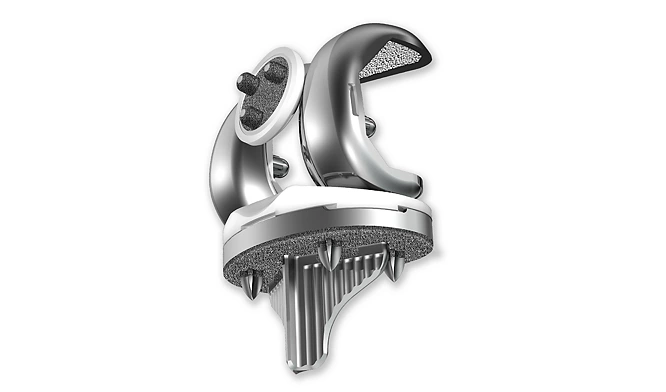
Why cementless TKA?
Encouraging outcomes for challenging patient demographics
Patient demographics for TKA have become younger and heavier,1,2 and these patients have demonstrated higher risk of revision in TKAs.3-5 When biologic fixation is achieved, cementless TKA has the potential for a more durable bone-implant interface that can better withstand the added mechanical stress in obese patients.6 In a retrospective study with 193 patients with a minimum of five-year follow-up, morbidly obese (BMI ≥40) patients receiving cementless primary Triathlon TKA with a PS design demonstrated improved survivorship compared to those who received a cemented Triathlon TKA.5 Furthermore, the American Joint Replacement Registry reported male patients younger than 65 years adjusted for age receiving a cementless TKA showed a better survivorship than those who received cemented TKA; however the difference is small (<1%) and does not account for other potential confounders.7
Potential savings in time and cost
As the volume of TKA procedures continues to increase, the costs associated with this surgical procedure continue to be an important topic. Cementless TKA allows the potential to reduce operating room time8,9 and save expenses without the use of bone cement and cement accessories.10 A healthcare economic study in the U.S. concluded that the actual overall cost of cementless TKA could be offset by shortened operating room time and the lack of need for cement and cementing accessories.10
There are no reviews yet.